0:00
hey there welcome back to our Channel
0:03
boost today we are diving into a topic
0:06
that every car Enthusiast should be
0:07
aware of the symptoms of a bad boost
0:10
sensor before we jump into the symptoms
0:13
let's quickly discuss what a boost
0:15
pressure sensor actually
0:16
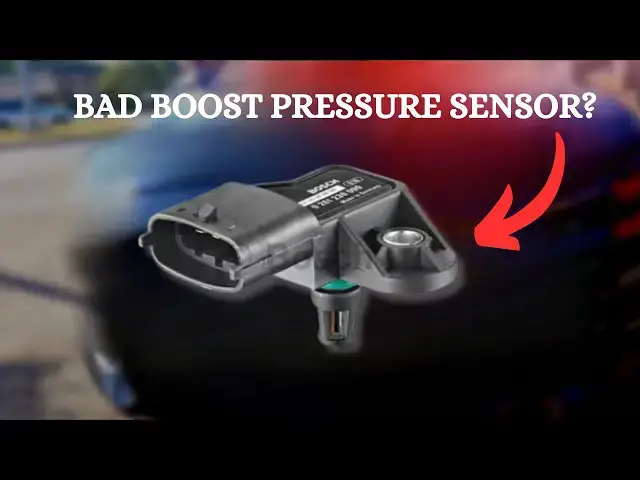
is a boost pressure sensor monitors the
0:19
boost pressure within the intake
0:21
manifold the engine control module uses
0:23
this data to gauge the proper amount of
0:25
fuel determine optimal ignition timing
0:27
and operate the turbocharger waste gate
0:31
essentially it ensures that the engine
0:33
receives the correct amount of air and
0:36
combustion the boost pressure sensor is
0:39
usually located in the intake pipe in
0:41
front of the throttle
0:42
valve it can also be found between the
0:44
outlet of the turbo and the throttle
0:46
body down by the intercooler or easily
0:51
top now let's talk about the common
0:54
signs that your boost pressure sensor
0:57
failing one loss of power
1:02
one of the most common symptoms is a
1:06
power if your car feels sluggish or
1:08
struggles to accelerate it could be due
1:10
to a malfunctioning boost pressure
1:19
economy incorrect readings from the
1:21
boost pressure sensor can cause the
1:23
engine to run either too rich or too
1:25
lean running rich leads to excessive
1:28
fuel consumption while running lean can
1:30
result in incomplete combustion and
1:33
efficiency both scenarios can contribute
1:40
economy three surging or
1:44
stalling in accurate readings from the
1:46
boost pressure sensor can cause
1:48
irregularities in the air fuel mixture
1:50
leading to engine surges or hesitations
1:53
acceleration if the sensor provides
1:56
drastically wrong information it can
1:58
even cause the engine to stall
1:59
especially during sudden throttle
2:05
variations four check engine
2:10
light when the engine control module of
2:13
your car detects a problem with the
2:14
boost pressure sensor such as
2:16
inconsistent readings or a complete
2:18
failure it triggers the check engine
2:21
driver your vehicle's computer may also
2:25
code common trouble codes associated
2:28
with a bad boost pressure sensor include
2:43
idle an unstable idle speed can occur
2:45
when the engine control unit receives
2:47
incorrect data from the boost pressure
2:49
sensor the engine control unit relies on
2:52
this sensor to maintain a stable idle by
2:54
adjusting the air fuel mixture and
2:57
timing if the sensor provides Ides in
3:00
accurate readings the ECU May struggle
3:02
to keep the engine running smoothly at
3:12
knocking incorrect air fuel mixture
3:14
caused by a faulty boost pressure sensor
3:16
can lead to abnormal combustion
3:18
resulting in engine knocking or
3:19
pinging running too lean can cause
3:22
detonation while running too rich can
3:24
lead to pre-ignition both of which can
3:30
seven excessive exhaust
3:35
smoke a faulty boost pressure sensor may
3:38
cause the engine to run rich meaning
3:40
there is an excess of unburned fuel in
3:43
Chambers this unburned fuel passes
3:45
through the exhaust system leading to
3:50
emissions eight engine
3:55
misfires incorrect readings from the
3:57
boost pressure sensor can result in
3:59
improper Fuel and air mixture leading to
4:02
misfires misfires occur when the air
4:04
fuel mixture fails to ignite or ignites
4:10
time if you're experiencing any of these
4:12
symptoms it's essential to address the
4:15
promptly ignoring a faulty boost
4:17
pressure sensor can lead to further
4:19
engine damage and costly repairs down
4:22
line depending on the severity of the
4:24
issue you may need to replace the boost
4:27
sensor thankfully this is relatively
4:30
straightforward repair that can be done
4:34
technician if you found this video
4:36
helpful be sure to give it a thumbs up
4:38
and subscribe to our channel for more
4:41
tricks as always thanks for watching and
4:44
we'll see you in the next